Traditionally, workforce planning has centered on a familiar question: How many people do we need to hire?
But headcount alone doesn’t tell the full story.
As technology changes how work gets done and business priorities continue to shift, organizations need to think beyond positions and vacancies. The more important question is: What capabilities does the business need to achieve its goals, and what’s the most effective way to access them?
From Headcount Planning to Capability Planning
The shift toward capability-based workforce planning reflects a changing business environment.
According to the World Economic Forum’s Future of Jobs Report 2025, employers expect 39% of workers’ existing skill sets to be transformed or become outdated between 2025 and 2030. Meanwhile, AI and automation are reshaping tasks, workflows, and the capabilities organizations need to remain competitive.
These changes don’t necessarily mean organizations need fewer people. They mean leaders need a clearer understanding of where human expertise creates value, where existing employees can grow, and where technology or flexible talent models can support business objectives.
Rather than starting with an organizational chart or a list of open positions, effective workforce planning begins by examining the work itself.
Four Decisions That Should Shape Your 2027 Workforce Strategy
Not every capability gap requires a permanent hire. Depending on the business need, organizations have four primary options:
Hire: Build Long-Term Capability
Permanent hiring makes sense when a capability is strategically important, consistently needed, and best developed within the organization.
This may include leadership positions, specialized expertise, or roles that require deep institutional knowledge and long-term accountability.
Build: Develop the Talent You Already Have
When an organization has employees with the potential to take on new responsibilities, internal development may be a more effective option.
Upskilling, reskilling, succession planning, and internal mobility can help close capability gaps while retaining valuable organizational knowledge.
Automate: Rethink How Work Gets Done
AI and automation create opportunities to streamline repetitive processes, improve productivity, and free employees to focus on higher-value activities.
The starting point should be identifying tasks and workflows that can be improved, rather than assuming entire roles can or should be eliminated.
Augment: Access Flexible Expertise and Capacity
Some workforce needs are temporary, highly specialized, or difficult to address quickly through permanent hiring.
Staff augmentation, project-based talent, and other flexible workforce solutions can help organizations access capabilities, support transformation initiatives, and respond to changing demand without immediately expanding permanent headcount.
The Right Workforce Strategy Is Rarely One-Size-Fits-All
For most organizations, the answer isn’t exclusively hiring, development, automation, or augmentation. It’s finding the right combination.
A business undergoing digital transformation, for example, might hire a permanent technology leader, develop internal employees to support new systems, automate routine processes, and engage specialized project talent during implementation.
Each decision should reflect the capability required, its strategic importance, the speed at which it’s needed, and the long-term cost and flexibility of the workforce model.
The goal isn’t simply to manage headcount. It’s to build a workforce capable of executing the business strategy.
Build Your 2027 Workforce Blueprint
As you evaluate workforce priorities for the year ahead, a few questions are worth considering:
- Which capabilities are most critical to achieving our 2027 business objectives?
- Where do we have gaps in skills, expertise, or capacity?
- Which capabilities should we own and develop internally?
- Where could AI, automation, or process redesign improve performance?
- Where would flexible talent provide greater speed or adaptability?
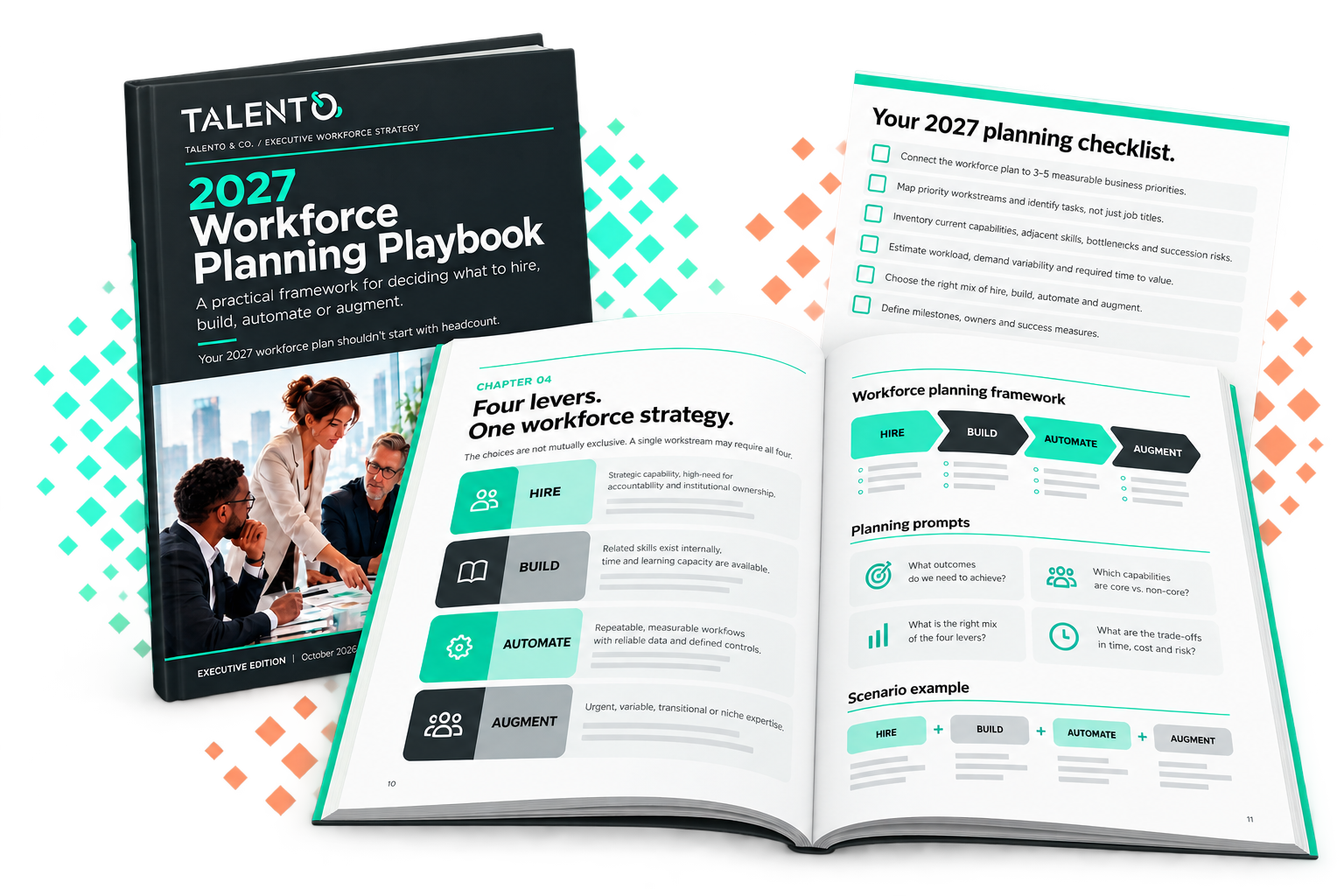
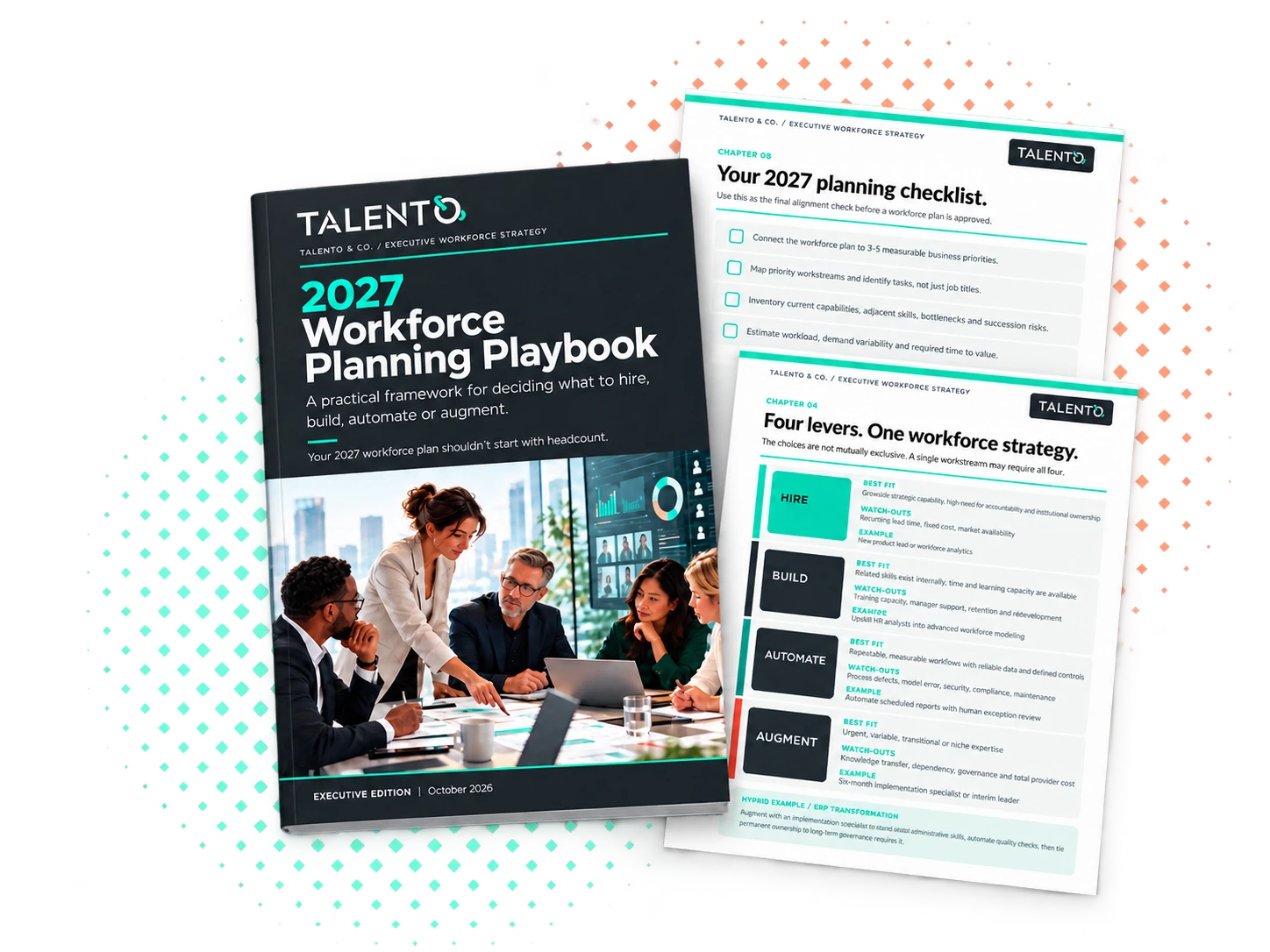
To help leaders work through these decisions, Talento has developed the 2027 Workforce Planning Playbook, a practical resource for evaluating capability gaps and determining when to hire, build, automate, or augment.
The playbook includes a workforce decision framework, evaluation criteria, and actionable planning exercises to help connect workforce investments with business priorities.