

Learn how confidential executive search identifies, approaches, and assesses passive leadership candidates while protecting organizational and candidate trust.
Why passive executives require a different recruiting approach
Senior leaders who are performing well rarely behave like active applicants. They may be open to the right mandate, but they need a credible reason to enter a conversation and confidence that their privacy will be respected. Confidential executive search combines research, context-rich outreach, controlled information sharing, and careful process management to earn that trust.
Build a leadership market map before outreach
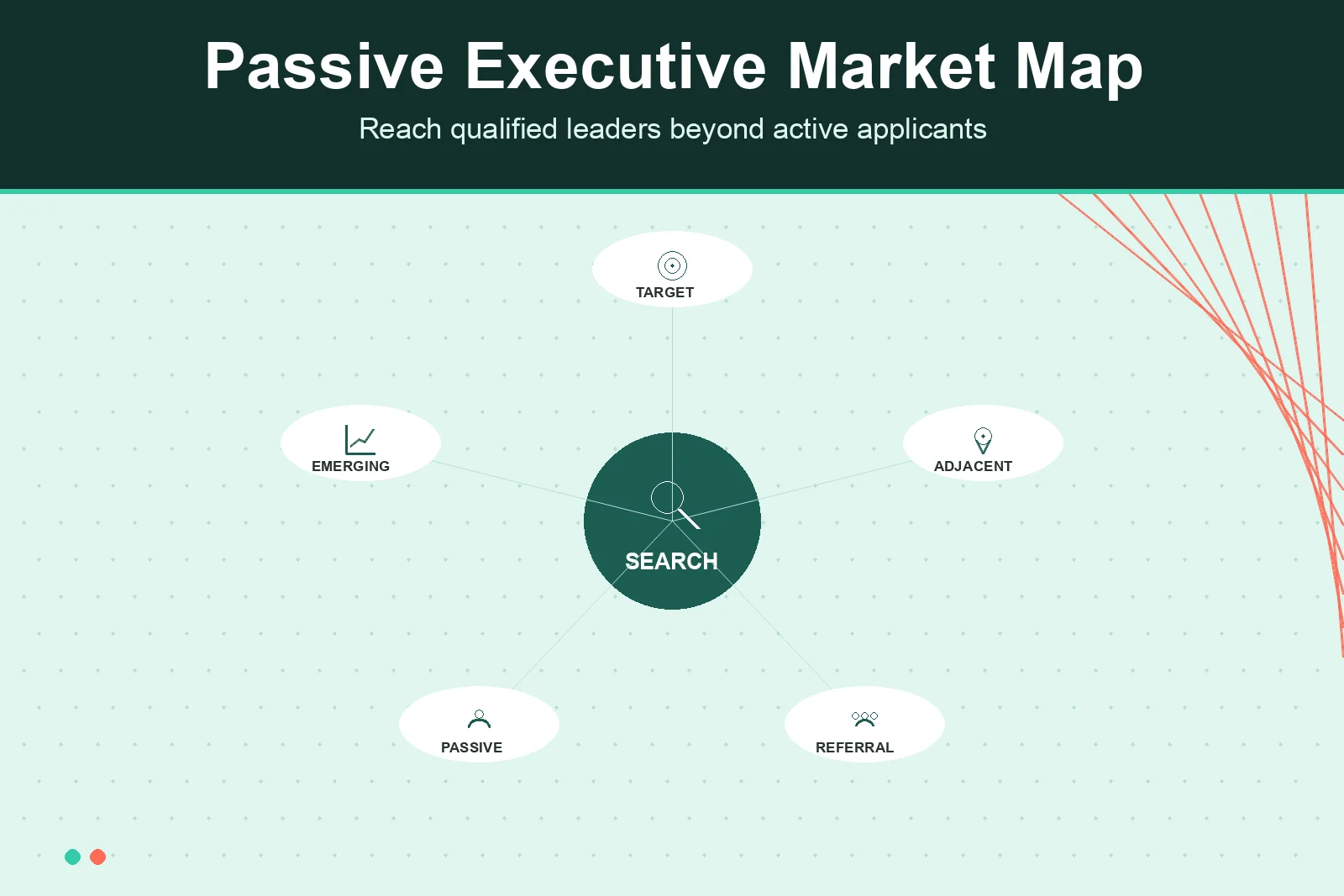
Define the strategic outcomes, operating scale, stakeholder environment, and leadership capabilities that matter, then identify target and adjacent markets where those experiences can be found. Include referral paths and non-obvious profiles rather than limiting research to matching titles. A market map gives TalentoHC a focused basis for personalized outreach and gives the employer evidence about talent supply.

Lead with relevance, not a generic opportunity
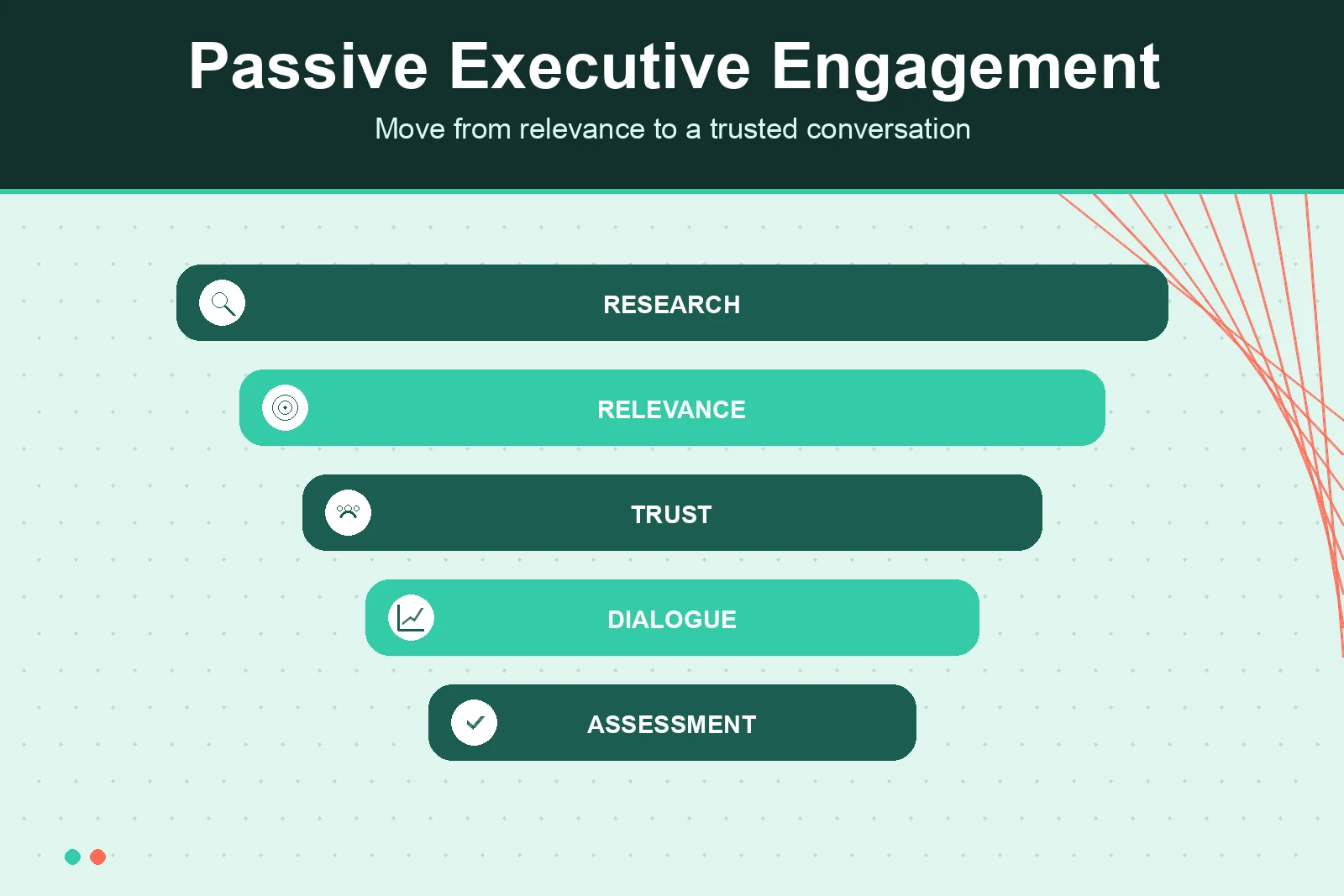
Passive executive candidates respond to a business challenge, leadership mandate, and credible connection to their experience—not mass messaging. Initial outreach should explain enough context to establish relevance without exposing sensitive company information prematurely. The advisor must also be prepared to discuss why the role matters, how decisions will be made, and what the organization can responsibly disclose.
Design confidentiality into every stage
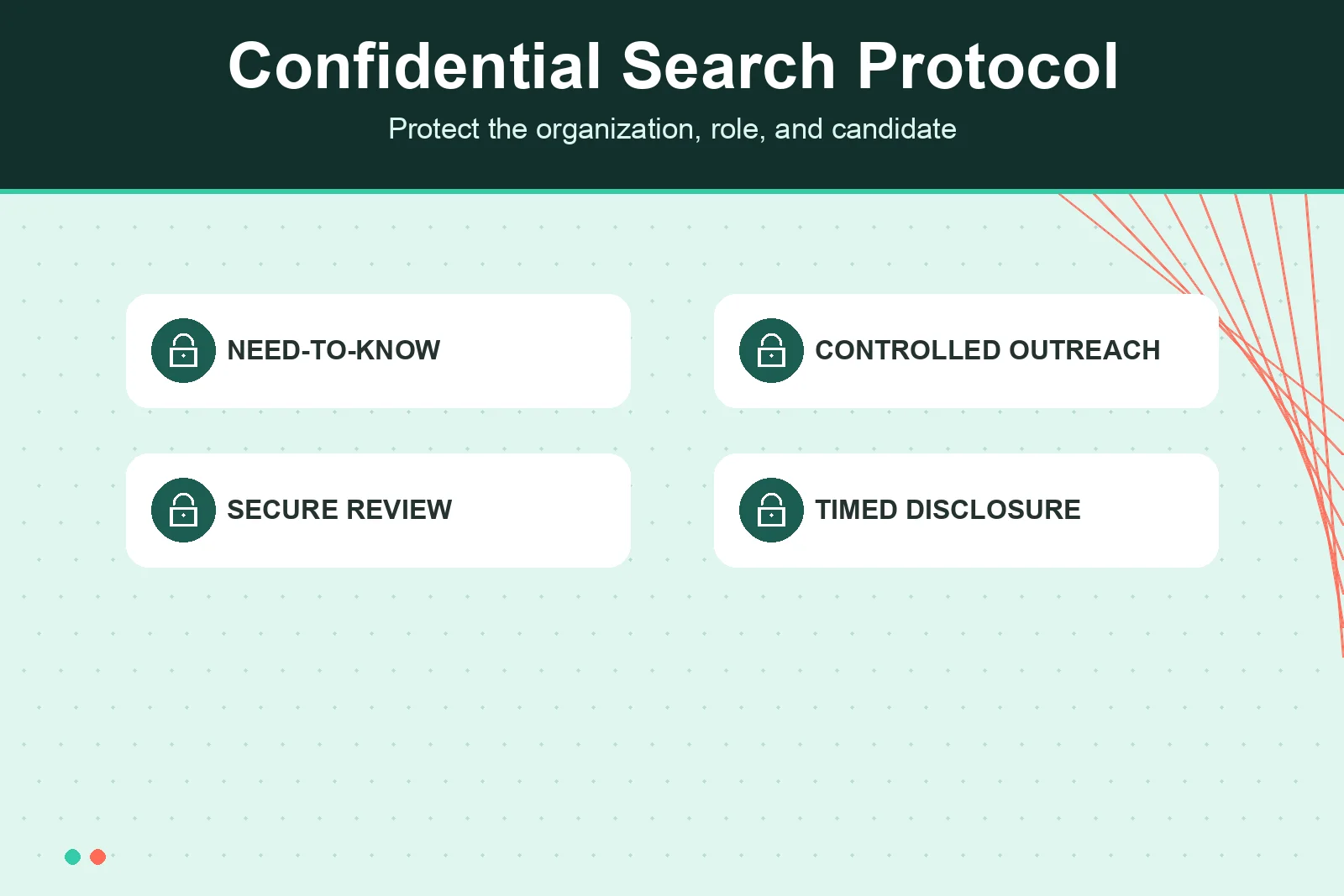
Agree on what can be shared, with whom, and at what point in the process. Use a need-to-know decision team, consistent candidate identifiers, secure document handling, controlled scheduling, and a clear plan for references and public disclosure. Confidentiality protects both the organization and executives whose current roles could be affected by an exposed conversation.
Assess motivation and leadership evidence
Interest alone does not establish fit. Structured discussions should explore the executive’s results, decision context, team leadership, motivation, constraints, and appetite for the mandate. TalentoHC uses the agreed scorecard to compare evidence consistently while continuing to give the candidate a realistic view of the opportunity.
Maintain trust through close and transition
Passive executives may face counteroffers, notice obligations, deferred compensation, relocation questions, and concerns about stakeholder reaction. Surface those issues early enough to solve them rather than discovering them after acceptance. A coordinated close and transition plan maintains discretion while preparing the new leader to enter with clarity.
Sources and further reading
confidential executive search FAQs
What is a confidential executive search?
A confidential executive search limits sensitive information to the people and stages where it is needed while identifying and assessing leadership candidates. TalentoHC establishes disclosure rules, decision ownership, and secure communication practices with the client before outreach.
Why do companies use confidential executive search?
Organizations may need discretion during a planned leadership change, succession review, sensitive growth initiative, replacement, or newly created role. Confidentiality helps protect operations, people, and candidate relationships while the organization evaluates options.
How do executive search firms find passive candidates?
Search firms use original research, industry networks, referrals, adjacent-market analysis, and direct outreach rather than relying only on applicants. TalentoHC maps the relevant leadership market and approaches prospects with a message tailored to their experience.
When should the company name be disclosed?
The disclosure point depends on the sensitivity of the search and the information a candidate needs to evaluate the conversation. The client and search partner should agree on a staged protocol so qualified candidates receive appropriate context without unnecessary exposure.
How can employers keep a confidential search moving?
Use a small decision team, reserve interview time, provide fast consolidated feedback, and establish clear disclosure and reference steps. A disciplined cadence reduces the number of people involved and prevents delays that can erode candidate trust.