

Learn how a rigorous executive search process moves from role definition and market mapping to assessment, selection, onboarding, and measurable outcomes.
Why the executive search process starts before sourcing
A successful executive search begins with the business mandate, not a list of credentials. The search team should understand the strategy, operating environment, stakeholders, leadership gaps, and measurable outcomes expected during the executive’s first year. That discovery work gives TalentoHC the context to distinguish a candidate who looks qualified from a leader who can perform in the actual role.
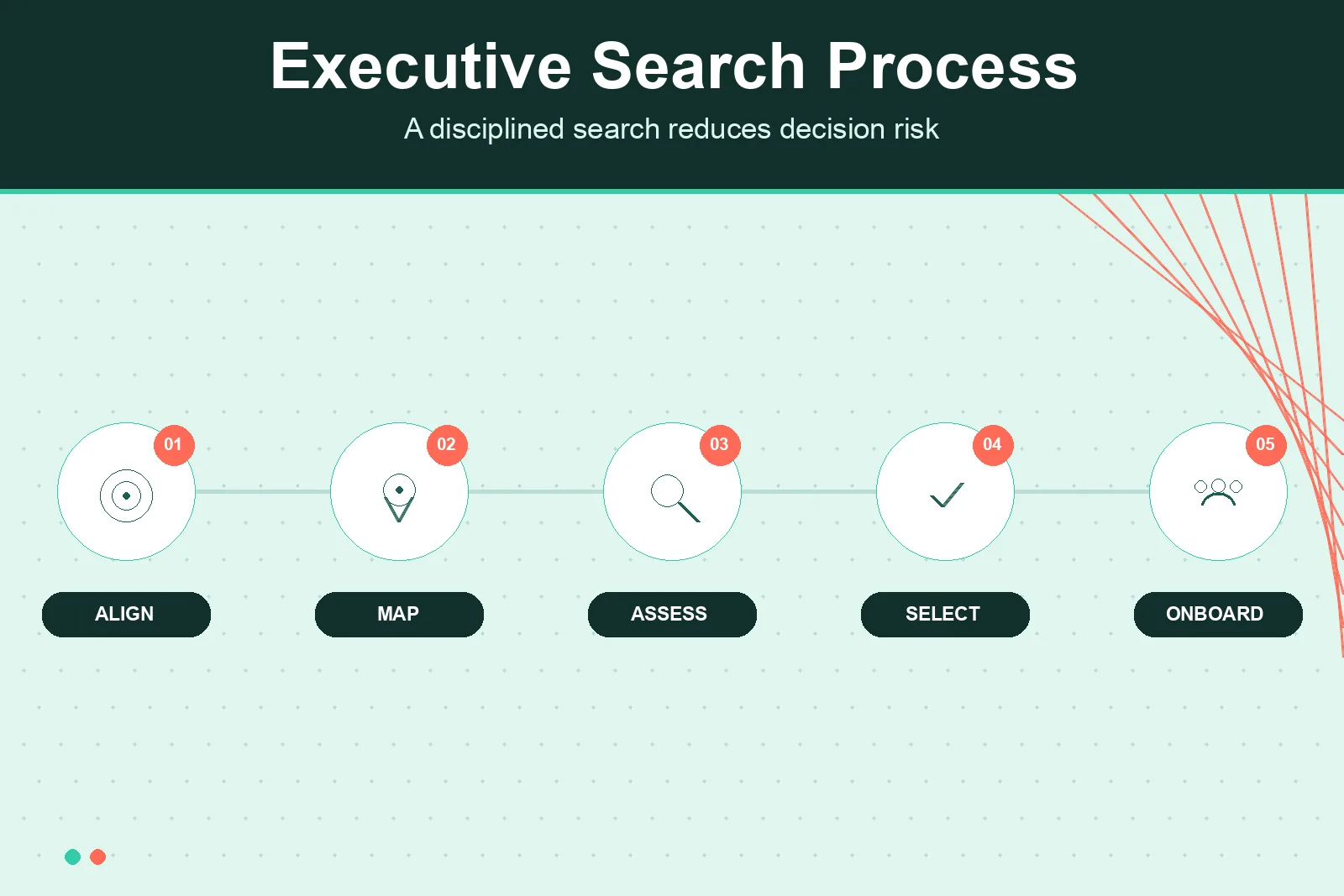
Step 1: Align the mandate and decision team
Define why the role exists, what must change, which results matter most, and who owns the final decision. Agree on compensation, location, reporting relationships, confidentiality, interview availability, and decision rights before outreach begins. A written scorecard keeps the board, CEO, and hiring committee focused on shared evidence rather than shifting preferences.

Step 2: Map the market beyond active applicants
Executive recruiting requires a research-led view of the relevant market, including direct competitors, adjacent sectors, analogous operating models, and leaders who are not actively applying. A strong market map tests whether the original profile is realistic and identifies transferable experience that a title-only search could miss. TalentoHC uses those insights to shape targeted, credible outreach.
Step 3: Assess leadership evidence consistently
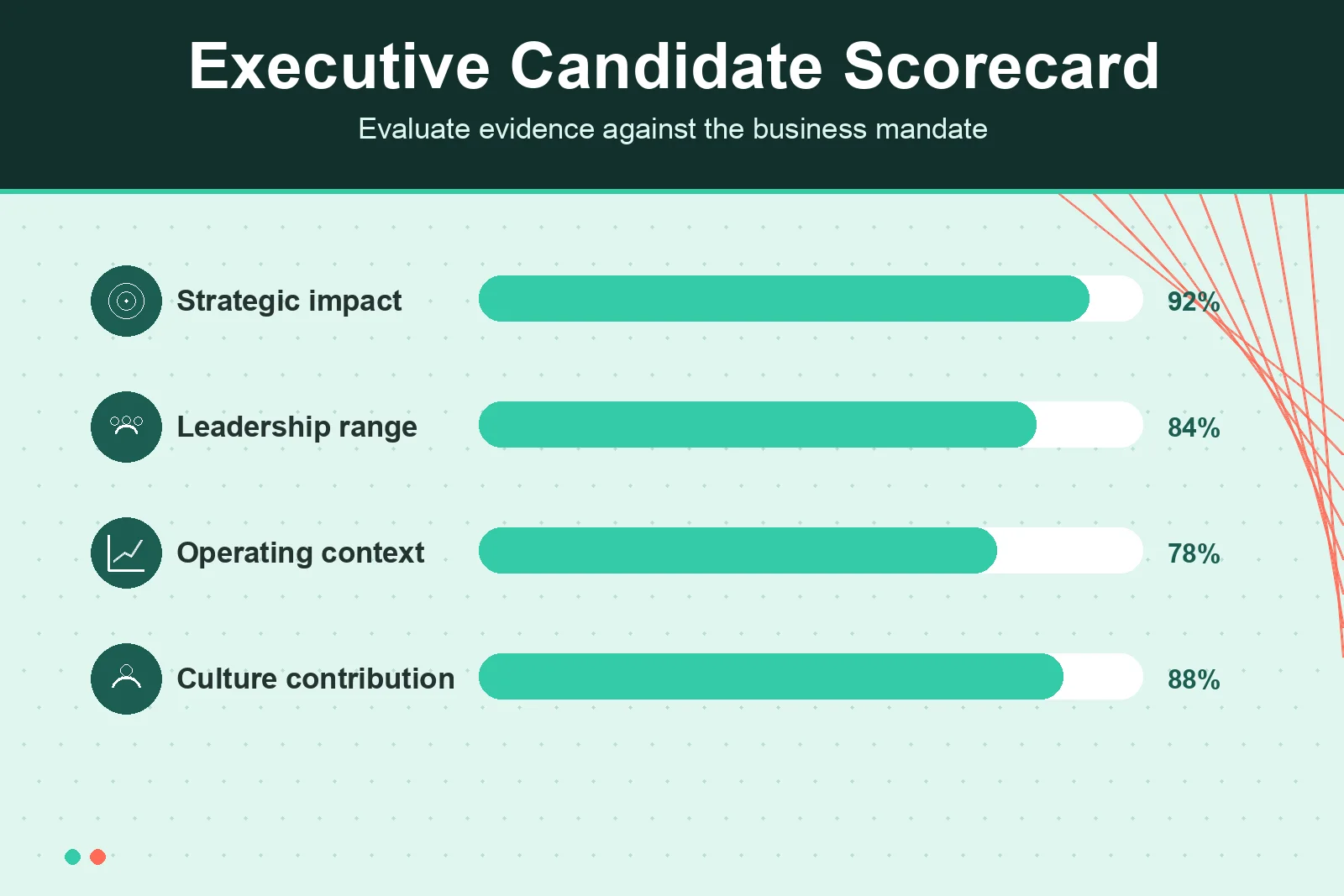
Structured interviews should connect every question to the agreed scorecard and ask for evidence of scope, decisions, tradeoffs, team leadership, and results. References and other assessments should verify the same themes rather than operate as disconnected steps. The U.S. Office of Personnel Management notes that structured interviews support consistent evaluation by asking candidates the same predetermined questions and applying common rating standards.
Step 4: Select, close, and protect the transition
Selection is more than ranking finalists. Employers should examine motivation, constraints, stakeholder chemistry, compensation, notice periods, counteroffer risk, and the conditions the executive needs to succeed. Clear communication and a coordinated close protect trust while a practical onboarding plan translates the search thesis into priorities for the first 30, 60, and 90 days.
How to evaluate an executive search firm
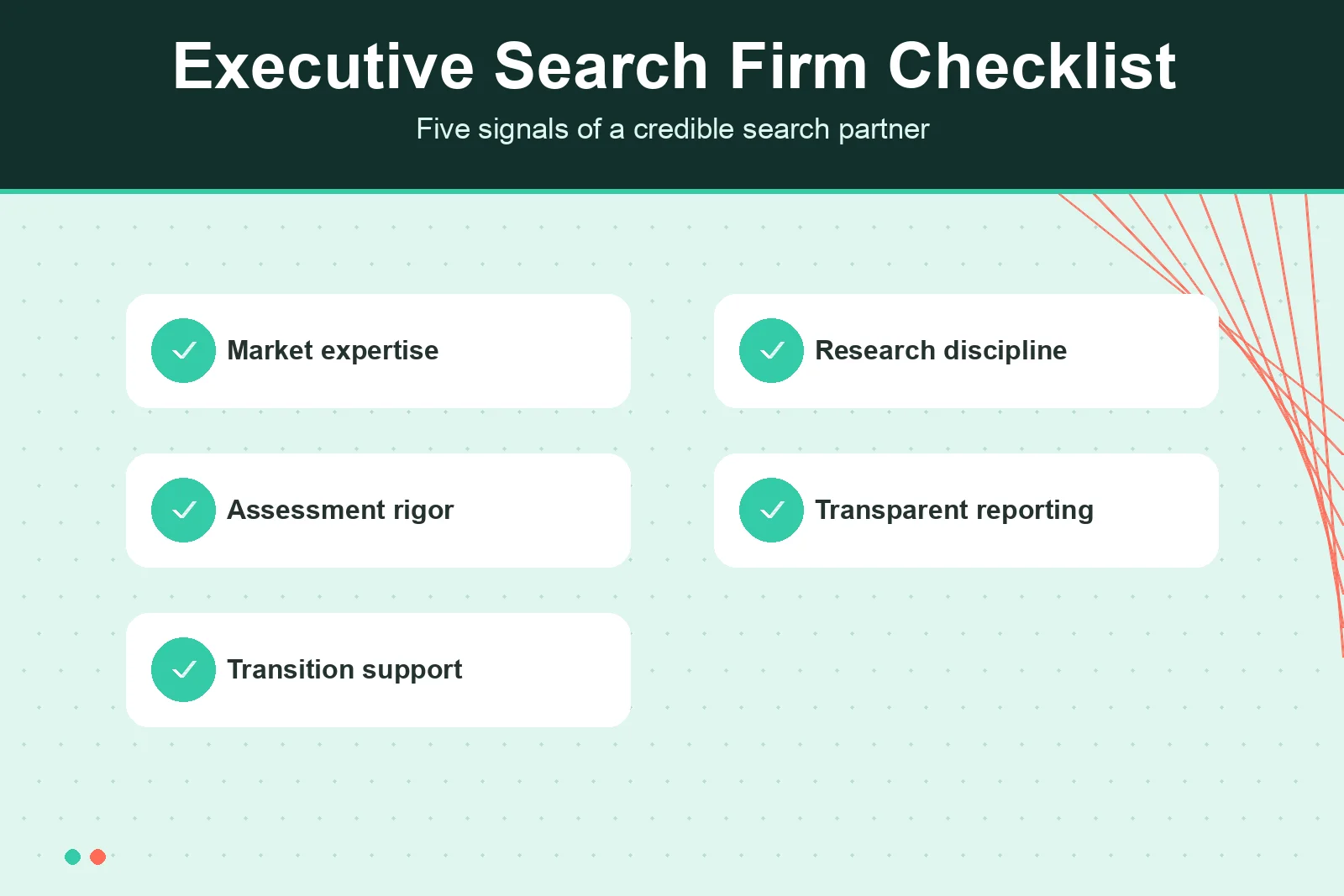
Look for evidence of relevant market knowledge, original research, disciplined assessment, transparent reporting, and support after acceptance. Ask how the firm handles conflicts, candidate confidentiality, off-limits restrictions, references, and search recalibration. TalentoHC combines executive search with industry context and human capital advisory so the process stays connected to the organization’s broader talent strategy.
Sources and further reading
executive search process FAQs
What are the main stages of an executive search process?
Most executive searches include discovery and role alignment, market research, targeted outreach, qualification, structured assessment, finalist selection, references, offer management, and onboarding support. TalentoHC adapts the sequence to the role, market, confidentiality needs, and decision structure.
How long does an executive search take?
Timing varies with role complexity, geography, compensation, market supply, confidentiality, and interview availability. A clear scorecard and responsive decision team reduce avoidable delays, but employers should protect the time needed for rigorous research and assessment.
Who should participate in an executive search?
The group should be small enough to make decisions and broad enough to represent the executive’s critical stakeholders. Boards or hiring leaders should define one process owner, establish decision rights, and gather structured input without turning every conversation into a veto.
What is an executive search scorecard?
An executive search scorecard translates the mandate into weighted outcomes, experiences, leadership capabilities, and contextual requirements. It gives TalentoHC and the client a consistent framework for interviews, finalist comparisons, references, and the eventual onboarding plan.
What makes executive search different from general recruiting?
Executive search usually involves original market research, confidential outreach to passive leaders, deeper assessment, and close partnership with senior decision-makers. The work focuses on leadership impact and organizational context rather than generating a high volume of applicants.