

Build an executive succession planning process that strengthens leadership readiness, benchmarks internal talent, and prepares boards for executive transitions.
Succession planning is a continuous governance process
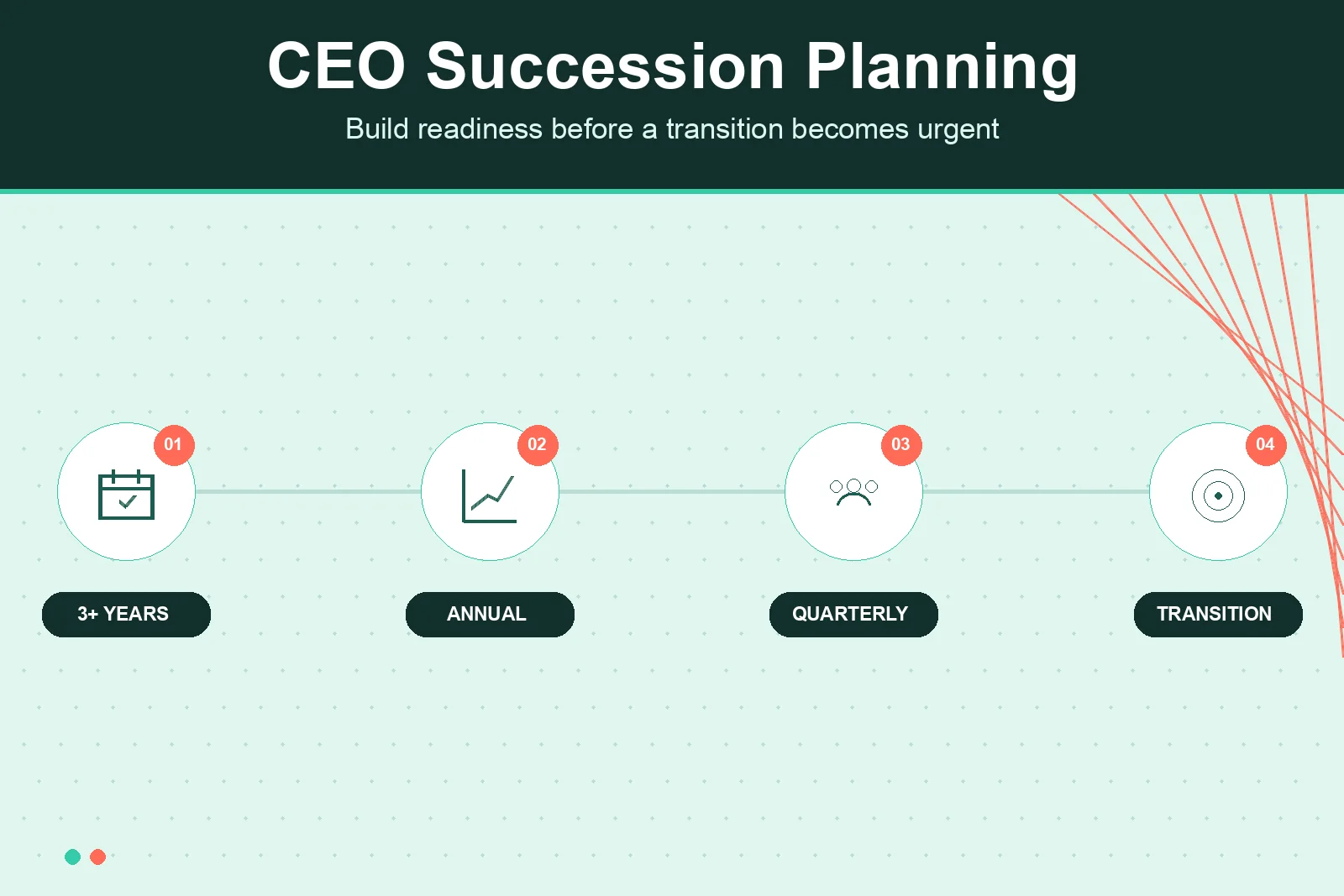
Executive succession planning should not begin when a departure is announced. It is an ongoing discipline that connects business strategy, leadership evaluation, development, external market intelligence, and transition readiness. NACD reported that 36 percent of private-company directors surveyed said their boards would be unprepared to identify a successor if the CEO left the next day, illustrating the risk of treating succession as an occasional event.
Define future leadership requirements
Start with the organization the next executive will inherit, not the profile of the current leader. Consider growth priorities, portfolio changes, technology, capital needs, culture, risk, stakeholder expectations, and the capabilities the leadership team will need over the next three to five years. Those future requirements become the basis for evaluating internal leaders and external benchmarks.

Build planned and emergency succession tracks
A long-term plan develops multiple viable leaders and gives the board repeated exposure to their judgment and performance. An emergency plan answers a different question: who can stabilize the organization immediately, what authority will that person hold, and how will stakeholders be informed? Both tracks need named owners, review dates, decision protocols, and secure documentation.
Assess readiness without confusing performance and potential
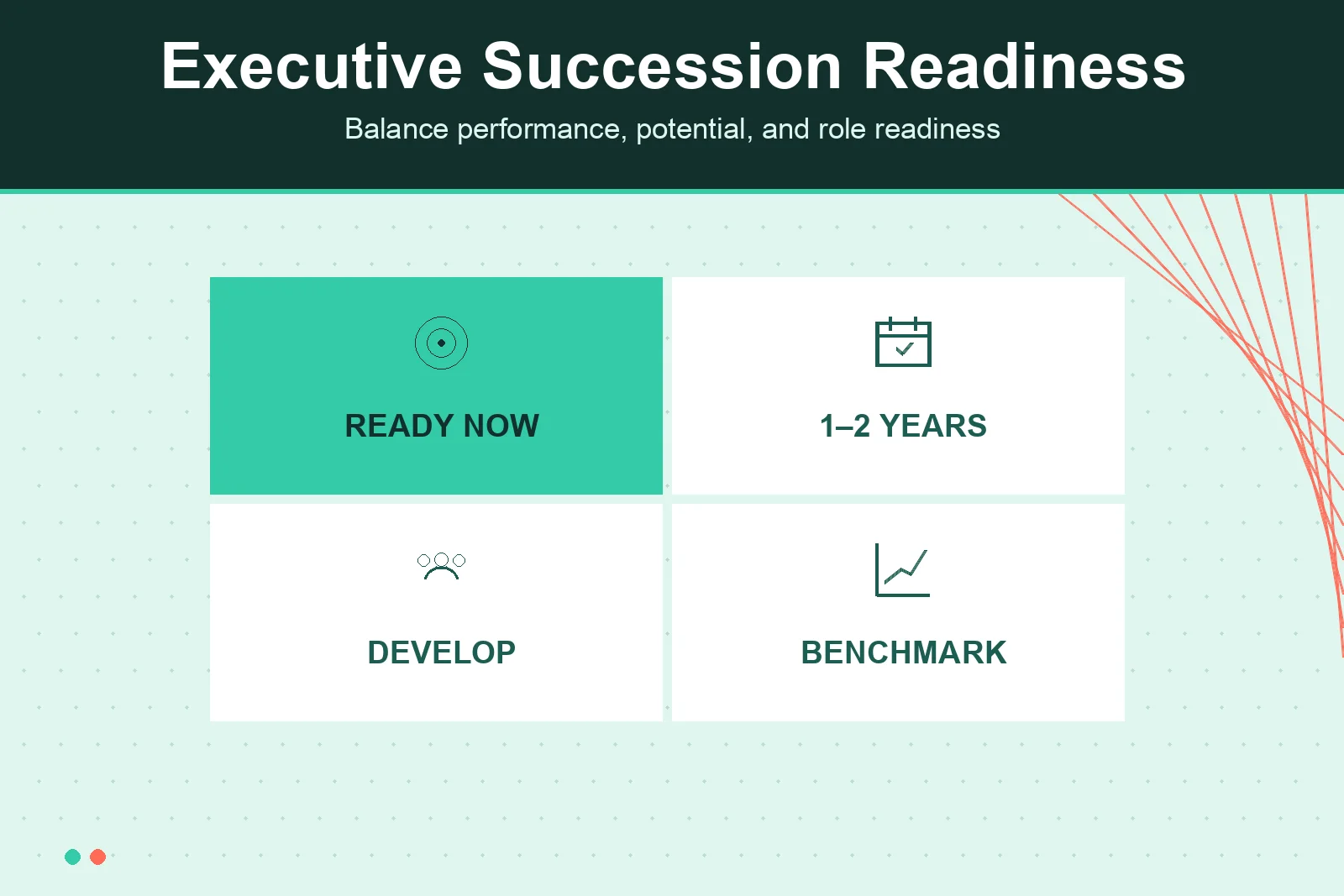
Strong performance in a current role does not automatically predict readiness for a broader executive mandate. Evaluate strategic range, enterprise influence, learning agility, operating scale, culture leadership, and experience with the situations the future role is likely to face. A readiness matrix can distinguish ready-now successors from leaders who need targeted development or exposure.
Benchmark internal talent against the external market
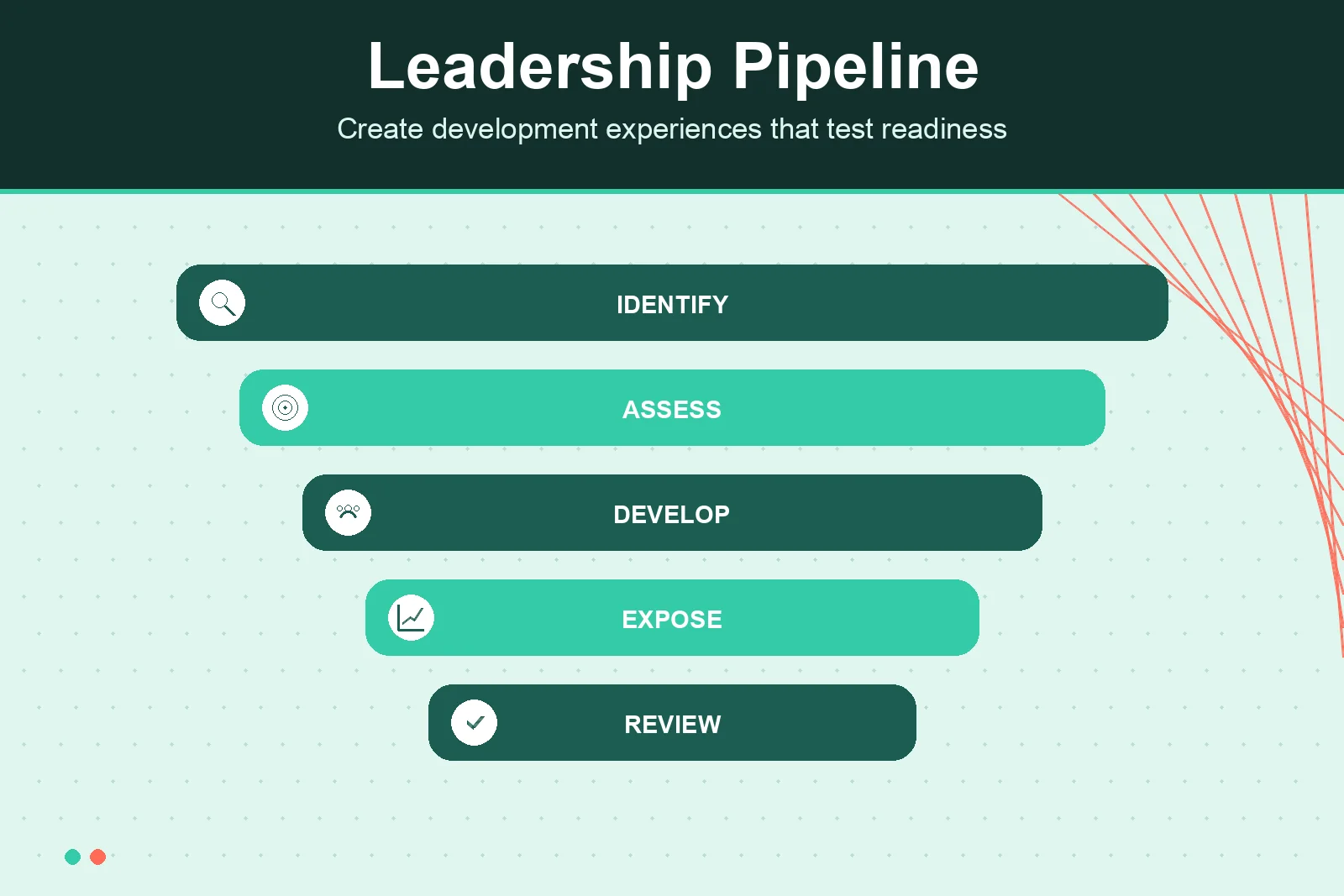
External market mapping gives the board context on available leadership profiles, emerging capabilities, compensation, and competitor structures. The objective is not to displace internal candidates; it is to make an informed comparison and reveal development gaps early. TalentoHC can conduct confidential benchmarking before a formal vacancy exists, preserving options for the board.
Turn succession decisions into successful transitions
The work continues after selection. A transition plan should define stakeholder communication, knowledge transfer, governance expectations, early priorities, team decisions, and measures of progress. TalentoHC links succession search and assessment to onboarding context so the new executive begins with a clearer mandate and stronger alignment.
Sources and further reading
executive succession planning FAQs
What is executive succession planning?
Executive succession planning is the ongoing process of defining future leadership needs, identifying and developing potential successors, benchmarking the market, and preparing for orderly or emergency transitions. TalentoHC helps organizations connect that governance work with assessment and executive search.
How often should a board review succession plans?
Boards should review CEO and critical executive succession at least annually and revisit readiness when strategy, performance, or leadership circumstances change. High-potential development and emergency contact protocols usually require more frequent monitoring.
Should succession planning focus only on internal candidates?
No. Internal development creates continuity and institutional knowledge, while external benchmarking shows what capabilities exist elsewhere and tests assumptions about readiness. A responsible plan preserves both options until the board has enough evidence.
What belongs in an emergency succession plan?
The plan should identify interim leadership options, authority, board decision steps, communication responsibilities, critical contacts, and immediate business priorities. It should be accessible to the right directors without compromising confidentiality.
How can an executive search firm support succession planning?
An executive search firm can map the external market, benchmark internal profiles, advise on role design and compensation, and run a confidential search when needed. TalentoHC can also connect search findings to leadership development and transition planning.